
Brakes rarely go from fine to failing overnight. Most of the time, they fade in small ways you can feel during normal driving, especially if you pay attention to what the pedal and steering are telling you. The problem is, those early signs are easy to explain away. You take a different route, the weather changes, traffic gets heavier, and suddenly it feels normal again.
If you’re trying to figure out whether your brakes are nearing the end of their useful life, these five signs are the ones we see drivers notice first.
How Brake Wear Shows Up Before It Gets Loud
Brake pads are designed to wear, but they should wear evenly and predictably. When something changes, it usually shows up in the “in-between” moments, like the first stop leaving your neighborhood, braking down an off-ramp, or slowing for a red light after a long cruise. That’s where you’ll notice a longer pedal travel, a new sound, or braking that takes more effort than it used to.
It’s also worth remembering that pads aren’t the only wear item. Rotors, calipers, brake fluid condition, and even tire traction all affect what your brakes feel like day to day. The signs below help you spot when the system is running out of margin.
1. Stopping Distance Is Getting Longer
This is the most important sign, and it’s often the one drivers adapt to without realizing it. You start braking a little earlier. You leave more room. You press the pedal a bit harder than you used to. If you keep needing more distance to stop at the same speeds, your brake pads may be worn down, your rotors may be glazed, or your pads may be overheating and losing bite.
If you notice this more during downhill braking or after a few repeated stops, that pattern can point to worn pads, heat stress, or fluid that isn’t handling temperature as it should.
2. Pedal Travel Is Increasing, Or The Pedal Feels Inconsistent
A brake pedal that suddenly sits lower or needs more travel before the brakes grab deserves attention. Sometimes that happens because the pads are getting thin, but it can also be caused by air in the system, fluid issues, or a caliper that isn’t applying evenly. In some cases, the pedal may feel normal on the first stop, then change on the next few stops.
If the pedal is inconsistent, don’t wait until it becomes obvious every time. We’ve seen cases where a small seep or trapped air turned into a bigger issue simply because it was easy to ignore at first.
3. You Hear Squealing That Keeps Coming Back, Or You Hear Grinding
Occasional noise can happen, especially with certain pad materials and weather conditions. The difference is repetition. If you hear a high-pitched squeal that keeps returning, it’s often the wear indicator telling you the pads are close to done. That’s the system giving you a warning while the repair is still straightforward.
Grinding is different. Grinding often means the pad material is gone and metal is contacting the rotor. At that point, rotor damage is likely, and the repair usually grows beyond a simple pad replacement. If you hear grinding, reduce driving and get it checked quickly.
4. The Steering Wheel Shakes Or The Brake Pedal Pulses During Braking
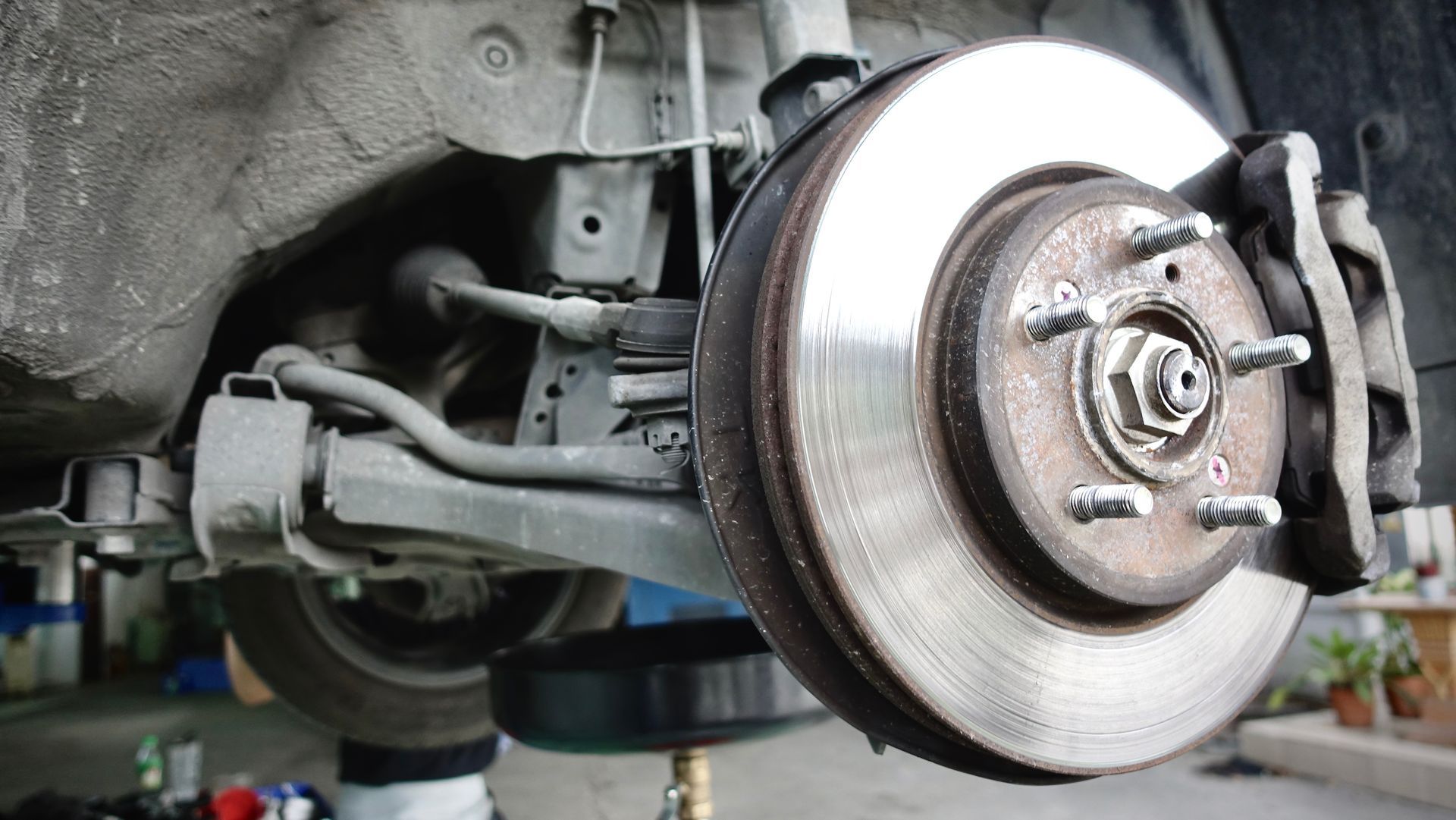
A pulse in the pedal or a shake in the steering wheel often points to uneven rotor surfaces or uneven friction contact. It can be caused by heat spots, pad material transfer, or rotor thickness variation. You may notice it most at higher speeds, like slowing down from highway speed, because the vibration is easier to feel there.
This is also a spot where a brake issue can overlap with a front-end issue. If there’s looseness in suspension or steering components, braking load can make it more noticeable. That’s why a complete inspection is better than assuming it’s rotors every time.
5. One Wheel Looks Dirtier Than The Others Or Smells Hot After Normal Driving
If one wheel is suddenly covered in more brake dust than the others, or you notice a hot brake odor after a routine drive, that can point to uneven braking or brake drag. A caliper that isn’t releasing well can keep a pad rubbing the rotor, which creates heat and accelerates wear fast.
This sign often shows up alongside faster pad wear on one corner, uneven rotor coloring, or a vehicle that pulls slightly. It doesn’t always mean the caliper is bad, but it does mean something isn’t operating evenly.
A Cost-Smart Plan For What To Do Next
If you’re seeing one of these signs, it’s smart to check sooner rather than later, especially if you drive in heavy traffic or do a lot of stop-and-go commuting. The lowest-cost path usually comes from catching wear early, before rotors are damaged or heat takes a toll on other parts.
When we inspect brakes, we look at pad thickness, rotor condition, caliper operation, hardware movement, and any signs of leaks or uneven wear. If a vehicle shows a pulse or shake, we also check the front end for play that appears under braking load. That approach helps you avoid replacing parts that aren’t actually causing the complaint.
Get Brake Service and Repair in Van Nuys, CA, with Sean's Auto Care
If your brakes are getting noisy, the pedal travel is changing, or stopping distances are creeping up, we can inspect the full brake system and show you what’s worn and what’s still usable. We’ll explain the options clearly and help you prioritize what should be handled now versus what can be scheduled.
Book your brake service in Van Nuys, CA, with
Sean's Auto Care, and we’ll help you get your stopping performance back where it should be.