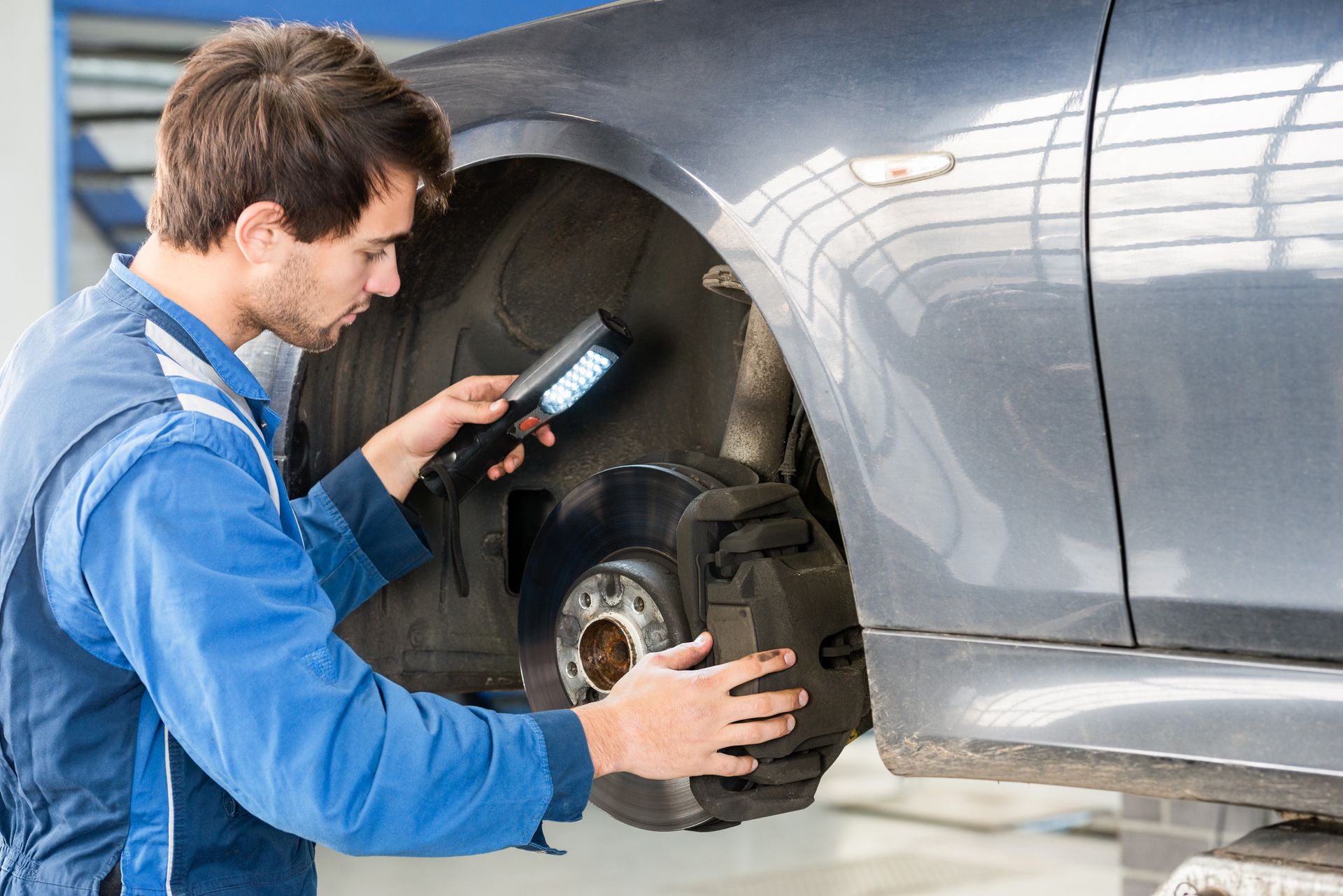

Brake pad glazing occurs when excessive heat changes the friction surface of the pad. Instead of maintaining a textured surface that grips the rotor effectively, the pad develops a hardened, polished layer. The rotor may also take on a shiny appearance.
Glazed brakes can reduce stopping performance, create squealing, and make the pedal feel less effective. The danger depends on how severe the glazing is and what caused it. A light surface condition may produce noise, while heavily glazed pads can increase stopping distance and lose more braking force as temperatures rise.
What Happens When Brake Pads Become Glazed?
Brake pads rely on controlled friction to slow the vehicle. When the driver presses the pedal, hydraulic pressure moves the caliper pistons and clamps the pads against the rotors. The friction material must tolerate high temperatures while maintaining consistent contact.
If the pad becomes hotter than its intended operating range, binders and resins within the friction material can change. The surface may harden and become less capable of creating the friction needed for dependable braking. Heat can also transfer unevenly into the rotor, creating polished areas or deposits.
Glazing is different from normal pad bedding. Proper bedding establishes an even transfer layer on the rotor. Glazing produces a hard surface that reduces effective friction and can prevent the pad from interacting with the rotor correctly.
Repeated Hard Braking Creates Excessive Heat
Frequent hard stops are a common cause of brake pad glazing. Aggressive driving, following too closely, repeated high-speed braking, and stopping late at traffic signals can generate more heat than the system can release between applications.
Mountain driving can create the same condition when the driver holds the brake pedal continuously while descending. Constant pressure keeps the pads against the rotors and allows temperature to build. Selecting an appropriate lower gear helps the engine control speed and reduces brake use.
Towing or carrying heavy loads also increases braking demand. The brakes must convert more vehicle energy into heat during every stop. Pads that are not designed for the vehicle’s load and use may overheat earlier than a suitable heavy-duty friction material.
A Sticking Caliper Can Keep the Brake Applied
Glazing does not always come from driving habits. A sticking caliper piston, seized slide pin, restricted brake hose, or pad binding in the bracket can keep one brake partly applied after the pedal is released.
Continuous contact creates heat during normal driving. The affected wheel may develop a burning odor, excessive brake dust, or a temperature much higher than the other wheels. The vehicle may also pull, feel resistant, or use more fuel.
Replacing glazed pads without correcting the source of the drag allows the condition to return. Technicians need to check piston movement, slide pins, brake hoses, pad fit, hardware, and hydraulic pressure release before installing replacement parts.
Improper Bedding and Pad Selection
New brake pads and rotors often require a controlled bedding procedure. This process uses a series of moderate stops to establish an even friction layer while allowing the brakes to cool between applications.
Heavy braking immediately after installation can overheat fresh pads before their surfaces have stabilized. Holding the pedal firmly while the vehicle is stopped after a hard braking event can also leave uneven deposits on a hot rotor.
Friction material must suit the vehicle and its operating demands. Economy pads may not tolerate repeated high-temperature use as well as a product selected for towing, commercial driving, mountain travel, or performance applications. The correct pad should also match the rotor design and braking system.
Common Signs of Glazed Brake Pads
Noise is one of the most frequent complaints. A glazed pad can produce a high-pitched squeal as its hardened surface moves across the rotor. The sound may occur during light braking, after the brakes warm up, or through most of the pedal application.
Other signs can include:
- Reduced braking response
- Longer stopping distance
- A hard or ineffective pedal feel
- A burning odor near a wheel
- Shiny pad or rotor surfaces
- Vibration during braking
- Brakes that fade after repeated stops
- One wheel producing excessive heat
These symptoms can also result from worn pads, contaminated friction material, overheated brake fluid, damaged rotors, hydraulic faults, or tire problems. An inspection should confirm the condition of the complete brake system.
How Dangerous Are Glazed Brakes?
Glazed pads may still stop the vehicle during light driving, which can make the problem easy to underestimate. The greater concern appears during an emergency stop, steep descent, heavy load, or repeated braking event.
A glazed surface can have a lower and less predictable coefficient of friction. The driver may press harder on the pedal without receiving the expected braking force. If heat continues rising, brake fade can become more severe.
Continued overheating may damage rotors, caliper seals, wheel bearings, and brake fluid. Fluid exposed to excessive temperature can boil, creating vapor that compresses under pedal pressure. That can produce a soft pedal and a serious reduction in braking ability.
Can Glazed Pads Be Reused?
Light glazing may sometimes be removed by resurfacing the pad face and rotor when both components remain within specification. However, resurfacing is not always the strongest repair. Heat may have changed the friction material below the visible surface, and overheated rotors may contain hard spots or thickness variation.
Replacement is generally appropriate when the pads are deeply glazed, cracked, contaminated, unevenly worn, or damaged by excessive temperature. Rotors should be measured and checked for heat marks, scoring, runout, and minimum thickness.
The cause must be corrected at the same time. A complete repair may include caliper service, new hardware, hose replacement, brake fluid service, or a different pad formulation. Regular maintenance gives technicians opportunities to identify restricted movement and uneven wear before severe overheating develops.
Get Brake Pad and Brake Repair in Van Nuys, CA, With Sean's Auto Care
Sean's Auto Care in Van Nuys, CA, can evaluate brake pads, rotors, calipers, hoses, hardware, and hydraulic operation.